

Why CNC Turning Machines Are Essential for Modern Manufacturing

Updated: Apr 28
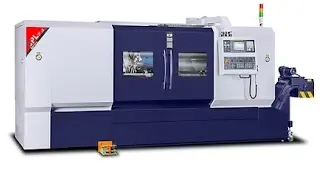
As production environments grow more competitive, manufacturers can no longer rely on manual methods or outdated machinery. They need solutions that deliver consistent quality, handle complex designs, and operate around the clock with minimal error, and this is exactly what CNC turning makes possible. By automating the turning process, these machines enable manufacturers to produce high-accuracy components at speed, reduce material waste, and lower overall costs.
Let's explore why CNC turning machines are not just tools of convenience but vital assets that keep modern manufacturing innovative, reliable, and globally competitive.
Evolution in Manufacturing With CNC Turning Machines
Unlike traditional manual lathe machines, which demanded high operator skill and were prone to error, CNC turning machines brought automation, accuracy, and speed to the production floor. This leap allowed manufacturers to move from slow, labor-intensive processes to highly efficient operations capable of meeting the demands of mass production.
As industries grew more complex, so did the requirements for parts. Two-axis CNC lathe machines soon evolved into multi-axis turn/mill centers, capable of handling drilling, milling, and turning in a single setup.
For manufacturers, it meant ability to take on more intricate designs that were previously impossible with conventional methods.
The impact has been profound: sectors such as automotive, aerospace, electronics, and medical devices now rely heavily on CNC turning to achieve the tight tolerances and repeatability essential to their products.
Roles in Different Manufacturing Industries
Automotive Industry
The automotive sector is one of the largest beneficiaries of CNC turning technology. From engine blocks pistons and transmission components to precision shafts and steering mechanisms, CNC turn/mill machines deliver parts with exceptional repeatability and accuracy. Their ability to combine multiple operations into a single setup makes them invaluable for both high-volume production lines and custom prototyping.
Aerospace & Defense
Few industries demand the same level of precision, safety, and performance as aerospace and defense. CNC turning machines play a vital role in producing turbine blades, landing gear components, fuel system parts, and structural fittings with micrometer-level accuracy. Advanced turn/mill machines are capable of working with high-strength and lightweight materials such as titanium, Inconel, and carbon composites, which are critical in reducing aircraft weight while maintaining structural integrity. Even the slightest deviation in part geometry can compromise safety, making CNC machining an irreplaceable asset for meeting stringent aerospace regulations and performance standards.
Medical & Healthcare
CNC turning can manufacture surgical instruments, orthopedic implants, prosthetics, and dental components. These parts often require complex geometries, smooth surface finishes, and the ability to withstand sterilization. CNC turning excels at machining biocompatible alloys and polymers like titanium, stainless steel, and PEEK, which are essential in implants and instruments that interact directly with the human body.
Electronics & Semiconductors
In the electronics industry, CNC turning produces micro-components, housings, heat sinks, and precision connectors. As devices continue to shrink in size while increasing in functionality, the demand for miniaturized yet highly reliable components has grown exponentially. These machines provide the accuracy and repeatability necessary for such small-scale production, ensuring parts maintain durability and alignment during assembly.
Energy & Power Generation
CNC turning supports both traditional and renewable energy sectors by manufacturing components that operate in extreme conditions. In oil and gas, parts such as valves, drill heads, and pump components require durability against pressure, corrosion, and wear. In renewable energy, CNC machines help produce wind turbine shafts, solar panel mounts, and hydroelectric system parts, all of which demand both strength and long service life.
Industrial Equipment & General Manufacturing
Beyond specialized sectors, CNC turning underpins a broad range of industrial equipment manufacturing. It is widely used for gears, fasteners, bearings, and hydraulic components, which are essential across virtually all industries. The versatility of turn/mill machines allows manufacturers to balance standardized mass production with the flexibility to create custom parts for unique applications. This adaptability, combined with their efficiency and accuracy, makes CNC turning a cornerstone of general manufacturing, ensuring equipment reliability and streamlined production processes worldwide.
Conclusion
CNC turning machines have slowly become the backbone of modern manufacturing. They empower industries to innovate confidently, deliver consistently, and compete globally with products that meet the highest standards of quality and safety.
At Campro USA, we bring you advanced CNC Turning and CNC Lathe solutions designed to meet the exacting demands of modern production. Partnering with Campro USA means investing in reliability, innovation, and the future of manufacturing.


Comments